Updated: October 21, 2023
Sometimes, I feel like I have too much time on my hands. Now and then, I take on an adventure that seems to bring mostly frustration, and no great practical value. Recently, I did just that. I decided to see how "good" the mobile Internet really is. After all, there are four transport media one can utilize the Web with - cable, phone, satellite, and mobile (radio). For most people in urban settings, the first two are the go-to options. In rural areas, sometimes, satellite and mobile are the only available options.
However, recently, more and more people use their phones as the primary computing device, and often they prance about the net without having a fixed connection at home. In other words, there be no physical cables going underground and into their living space, it's all done over-the-air. Put a SIM card into a device, get a radio signal to the cell tower, boom, Bob's your uncle. The question is, how viable is this for any sort of serious network usage? Well, Dedo the great sufferer decided to undergo several months of hard testing to answer that.
The experiment
My quest to figure out the quality of cellular slash mobile network usage took me across multiple countries. I used a whole bunch of devices, including several dedicated mobile routers, and I tried to be serious about it. There was a slew of important things to check, important things one would do: basic surfing, mail, sustained downloads, multiplayer gaming, VPN, hosting a server, chat and video calls, the stuff you'd expect people to do online. And there are a lot of findings here, so let's break then down.
The so-called 5G connectivity
There's an almost impossible variance of service provision, country to country, place to place. The element of randomness seems so high that there's really no pattern one can find in this whole chaos.
- ISP maps of connectivity and coverage are not reliable.
- 4G connectivity can mean anything between 0 Mbps to 500 Mbps.
- 5G connectivity can mean anything between 0 Mbps and roughly 1 Gbps.
For example, in one particular setting, with an LTE Cat12 smartphone, I was able to get 410 Mbps with a 4G SIM roughly 200 meters from the cell tower, direct line of sight. Just 700 meters away, with a bunch of buildings in the way, the download speed averages 40-60 Mbps on a good day.
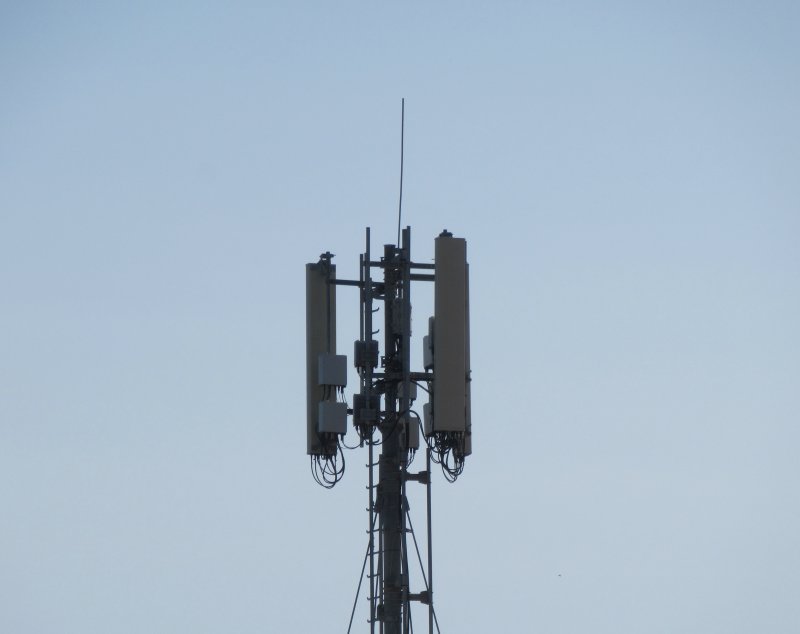
- Congestion is a real thing. The more people use the network, the worse the throughput is. This can vary from one hour to the next. You can even map human activity simply by tracking your network speed. Even in a fixed position, network download speeds can vary 10x in a given day.
- Weather plays a major part in the equation. Wind and rain significantly affect the quality of the signal, and hence the transmission speeds one gets. Again, the 10x factor comes into play.
- Network latency is worse than with a landline (cable or phone). Typically, 40-50 ms penalty on average.
- The latency changes significantly (based on signal strength, congestion and weather), and it can go anywhere from roughly 60-70 ms (typical latency) to as much as several seconds (usually short spikes).
- In practical terms, I found that 4G vs 4G+ vs 5G does not make much difference pretty much anywhere I went. In most cases, if you have a reasonably good signal, the weather is nice, and there aren't too many people utilizing the network, you can get by with a solid steady throughput. At that point, you may get 50-200 Mbps, and there isn't any real difference unless you do big, sustained downloads.
- Upload wise, most providers do not seem to cap the network (for now), and you will usually max out on whatever your device can do, regardless of what happens with the down stream. Of course, the weather still plays the part.
ISP companies
This turned out to be another interesting part of the experiment. The beauty here is that you can do a lot of testing really quickly. Get a SIM card, put it in a router, test, replace, repeat. Here, I discovered some rather surprising elements.
- Most companies use CG-NAT setups. CG stands for Carrier Grade, and it effectively means you don't really get a public IP address. Instead, you're part of a bigger, provider-organized NAT, and you share a public address with tons of other people. A private network within a private network, if you will. This effectively means that opening a port and hosting a service does not really work.
- I called various providers to ask them to cancel the CG-NAT, and/or assign a static IP address. Here, again, the variance was huge.
-
- Some companies have forever-loop phone lines, so you can't get to phone support, you must use crap chat.
- Chat operators are often useless, but hey, they are cheap. On the phone, you can only talk to one person, but in the chat, you can badly support a dozen people at the same time, saving costs for the company, and who cares about bad service, it's not like people have a choice, right!
- There's a HUGE difference in service quality among operators. Some are professional, some clueless.
- Some companies couldn't cancel CG-NAT, others could, and very easily.
- Some companies can assign private IP addresses to business customers, but not private ones.
- Some companies were able to the required task without any arguing at all.
- Some providers only give you IPv4, others also do IPv6. Frankly, I hate IPv6, so this ain't a biggie for me.
Now, let's talk about traffic shaping, throttling, caps, and whatnot:
Here, I was actually pleasantly surprised. This could be part incompetence, part policy, but most mobile network operators do not seem to meddle in user's traffic. Probably because the networks are over-used anyway, so there's no need. But let's notch down on the cynicism, and be optimistic and say this is actually genuine care for the customer. Serious face.
- The companies that advertise flat Internet actually do give it - weather, congestion and such notwithstanding.
- There do not seem to be any DNS filtering, any VPN interference, any throttling that I could see.
- Connection sharing (hotspot) seems to be tolerated (again, no throttling).
- Using your own equipment does not seem to be penalized.
- In one country, they went overprude and I had to ask for an "adult" filter to be removed.
Hardware
This is the wildest part of the whole thing. Buying network equipment for your mobile network. Here, I encountered the highest level of disappointment among all the different usage vectors. If you want to buy a SIM-only router, you're in for a lot of anger.
- There aren't many proper 5G routers out there, and they are usually very expensive.
- Most 4G routers are Cat6/7 devices, so you can expect max downloads of 300 Mbps, upload 50/100 Mbps.
- Many routers have a limited number of Ethernet ports (1-2, rarely 4); some also have a phone connection.
- Many routers still do not offer 1Gbps Ethernet ports - you can still find tons of 100Mbps ones, believe it.
- For those advertised as 1Gbps, Ethernet throughput was mostly 700-800 Mbps at best. In comparison, even 10-year old ADSL or cable routers, pretty much any, will do a proper full 1Gbps speed without any issues. Tested with multiple devices and cables, of course.
- The performance (actual network and processing capability) is often poor. Most routers cannot handle lots of connections, there's latency, and if you over-the-LAN copy, you won't get great results. Specifically, even with older, standard, average ADSL or cable routers, you typically get sub-1ms LAN latency and are able to copy roughly 20-30K (small) files per minute. Most modern mobile routers get 1-2ms LAN latency and can only do about 4-8K files/min throughput.
But wait, it gets worse and worse and worse!
- Some of the "newer" routers do not have a Web interface. They actually force you to use a shitty app from your mobile phone to connect and manage the device. Your own local device.
- Some of the device manufacturers require you to create an online account. This is some next-level smartphone crap right there. And technically, it means your device is utterly at the mercy of the manufacturer. Because, app and online account mean, in polite terms, a greasy backdoor. Even if there are no bad intentions on behalf of the manufacturer, whatsoever, this is a security problem waiting to happen.
- One particular device, after reboot, opens your default browser and tries to redirect to MSN. And this is in the EU, and AFTER GDPR (which they acknowledge all over the place in the settings). There isn't anything overly nefarious there, it's just stupid (ads) beyond belief.
- The Web UIs are relatively simple and you can't do much. Often, you can't disable everything you'd like.
- There are very few mobile routers that support DD-WRT and OpenWRT.
- Some mobile routers don't do IPv6 (I like it, but on a hardware level, it's embarrassing).
- The stability of mobile routers is less than their ADSL and cable counterparts. Typically, the latter can run for months and months on end, without any need for a reboot. A fair deal of mobile routers will start gimping within a few weeks.
- The hardware quality is less - in a span of just a few months, I saw several devices go bad, which is something I've rarely seen with the "classic" devices. One particular router only lost its 5GHz Wi-Fi antenna but stayed functional otherwise.
- Some of the routers support Wireless Mesh topologies, but the implementation is often wonky. The functionality isn't always well defined. Some of the devices can work with pretty much anything, others can only work with the specific models from the (same) manufacturer. Here, I noticed that extender node devices can also be quite buggy, too, and they need frequent reboots.
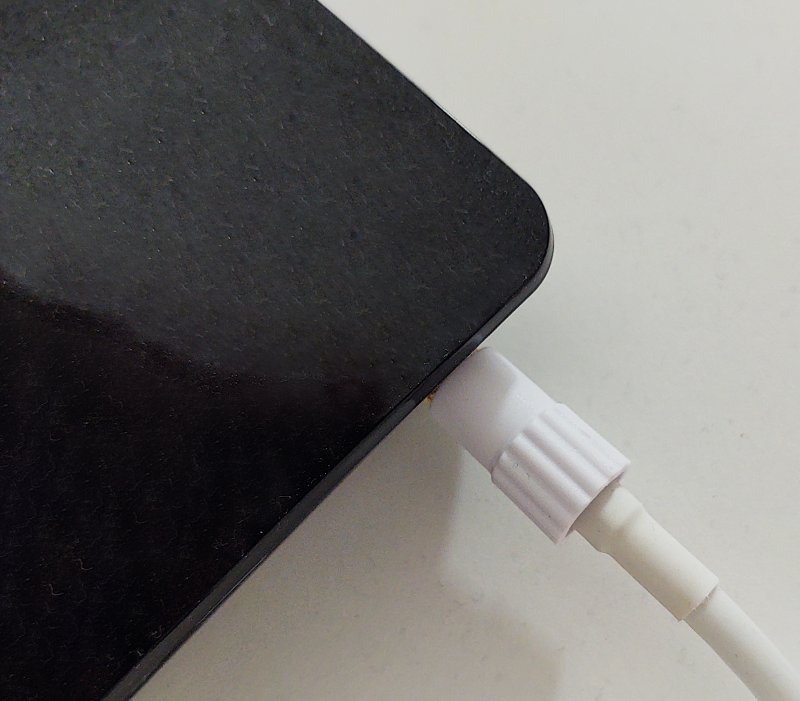
A mobile router with an SMA coax external antenna connected, which will "hopefully" boost the signal.
Oh, let's crank it up, shall we ...
- One particular device didn't have its Wired and Wireless networks bridged internally. So you could plug the Ethernet, but you'd never get to the Internet, only get an internal IP address on a weird, non-usable LAN segment.
- If you want to boost your mobile signal with an external antenna (which you technically can), be prepared for a whole range of inconsistencies:
-
- Some devices can support antennas, some can't.
- Some can use external antennas ONLY for the 4G radio but not 5G, or vice versa.
- The antenna connectors vary widely, SMA, SMB, TS9. Why? No reason except to annoy you.
And that brings me to the end of this fine, multi-month rant.
Conclusion
You will notice I have not mentioned any manufacturer, device or ISP in this article. The reason is, I have not done sufficient testing to lay blame at anyone's door. That requires further testing, a lot more data, and more than one person's setup. The thing is, when you have so many different factors mixed, it's impossible to control and account for every parameter all the time, and therefore, it's all too easy to dismiss results as a glitch in "one of the components" other than the one you suspect. Which is often what happens when you "call" support and tell them about this or that. They immediately send you to one of the other entities in this unholy union of technology and sadness.
Lastly, it's not like people have any real choice. They can often choose only between one, two, maybe three providers if they're lucky, their living location will often dictate the choice, their budget will dictate the mobile plans and the available hardware, and their level of technical skill slash competence and actual needs will narrow the options even further. Most people will go for whatever is cheapest and quietly suffer.
The main purpose of this article isn't to say: X bad, buy Y. It would actually be good if that were the outcome. No. The unfortunate conclusion is that the ENTIRE mobile network landscape is pretty much bad, and way worse than if you have the option of using cable or phone (fiber, whatever). And it's not like the traditional Internet providers are any better. Just margins of awful and slightly more awful.
But what really surprised me is, we have this relatively "new" medium, we're trailblazing with 5G, there's potential to transform the worldwide networks and give people high-quality utility, and instead, it's a morass of mediocrity. I had low expectations, but even these weren't met. I was merely looking for: stable provider, stable connection, okay hardware, okay usability. By and large, I wasn't able to find this anywhere. Not a single country, place, or any which mix of hardware ingredients gave me satisfactory results. At best, I have average service mated to average hardware, average and highly varied throughput, and a great deal of everyday frustrations. You can't take the mobile network for granted, you must always fiddle.
The year is 2023, not 2003, and Dedoimedo is sad. Bye bye.
Cheers.