Updated: July 12, 2024
It would seem, if it were up to tech bros, assorted corporate magnates, and random deluded executives and associated ladder climber sycophants out there, we would all be paying a subscription to use our own kidneys and expected to be grateful for it. Indeed, the level of greed in the modern tech space (and broader) is so shamelessly blatant and rampant, one almost reminisces with more than mild nostalgia for the days of the First French Republic and their use of stringent quality control measures. Fact, there were zero software bugs back then.
Alas, we now live in a "democratic" world, and we cannot resort to a more literal use of physics to solve problems. We must have a civilized discourse, right. Predictably, you may assume that words won't change anything, and most of the time, you'd be correct. But there's one really cool thing about the Internet - it likes to amplify negativity, and negativity is the only thing the big companies fear. Thus, your own weapon against being spiritually and financially degraded by the corporation is to immediately, vehemently and most loudly voice your complains about their stupid ideas and solutions. As it turns out, you may win some.

Credit: Photo by Jamie Haughton on Unsplash.
Let us ponder some examples
All right. We shall start by cheering you up. A handful of highlights from the last few years. We're talking about companies being forced to stop, pause, alter, or cancel their greedy decisions after customer backlash. While people aren't that smart, in general, there is still a basic, primal level of dignity we all wish to maintain. And once an offender crosses that line, people push back, quite hard. To wit:
BMW ends heated car subscription - The idea that you pay a monthly subscription for something you purchased and own is more than ridiculous. Not only that, BMW is a premium car manufacturer. You buy yourself a beautiful, luxurious, sporty car that costs a handsome sum, and then some sales peddler wants to insult you by asking you to pay "supposedly pennies" to warm your own seats no less. Well, it turns out people who buy premium cars do not like to be treated like peasant scum. Shows there's some hope yet.
Speaking of cars still, Volkswagen is going to reintroduce buttons for essential controls, like AC and radio and such. People complained, rightfully so, about the moronic use of smartphone-like touch interfaces for important car functions. Indeed, if you think about it, any car control that requires you to take your eyes off the road does not add to safety. In fact, for this precise reason, you are likely to get a big hefty fine and perhaps even points on your license if you use your phone while driving. And yet, using giant tablets AKA phones for all practical purposes, glued to your dashboard, is somehow okay. Hypocrisy and stupidity. I wrote about this in my own sweet rant on touch controls, and also referenced a study by a Swedish car magazine that showed that cars with real buttons are easier, faster, safer to operate. Touch down.
Still on the topic of cars, the European car safety program Euro NCAP will start rating car safety based on their use of buttons, touch interfaces and other car aids from 2026. The idea is to promote safer driving, which of course goes orthogonal to the use of simian touch interfaces. Perhaps low-IQ people love their phones, but then, if that's their need or concern, they shouldn't be driving. I've written dozens of letters to cars manufacturers, complaining about this nonsense - and also telling them I won't be buying their touch-only cars designed for clueless idiots - and it would seem that many other people felt the same way, enough to influence an important safety agency like Euro NCAP. One small step for humanity.

An interior as it should be, some touch, buttons for important functions, hand brake.
Next on the list, printing! HP is discontinuing their online-only e-series printers due to customer backlash. Wonderful. Fantastic. How can a printer, residing in your own home, be a device that is entirely at a mercy of some company out there? Printers need to be local (offline) devices. That's the whole idea. Printing over the Web is called email, and that was invented a long time ago. Well, people hated this cloud-based buzzwordfest, and they forced a company to dial back on their greed.
Meta cannot train its "AI" on feeds from its EU users. Rightfully so. A company wants to use your data, it can pay you. Very simple. The same way Meta wanted (and probably still wants) to force people to their new "pay or consent" model, they can also pay for consent. Very easy. Say USD11.99 per month for my data, up to 5GB. After that, it's an additional USD1.99 for every extra GB. Plus applicable taxes. Then, you can AI all you want. Speaking of Meta, I used to have a Facebook account for my book-related activities, so not really a personal one. I stopped posting there several years ago, as I found the entire exercise pointless, and finally deleted it just recently, after seeing the first snippets of news about this AI nonsense.
Lastly, Windows Recall on so-called Copilot+ PCs. Microsoft was forced to change their opt-out nonsense to allowing people to manually configure their systems if and when they want to use this functionality. Not that I see any reason for it, unless you want to degrade your cognitive skills. Think about it. If you need a machine to help you recall what you did on your machine or where you store your documents, you most likely need to go to a doctor, so they can help you raise your Vitamin D and cobalamin levels or something.
So what do we have here?
All right. If we look at the examples I outlined above, they all have one common denominator - public outcry. For different if rather similar reasons (safety, privacy, cost), people decided to say no to stupid, pointless, greedy ideas from a variety of companies. This shows that it is possible to shape the narrative of the story, to control the situation. It takes a lot of effort, it requires persistence, but it can be done. You can make buzzword-drunk executives walk back on their Dystopian dreams.
EZPZ, GG.
How do you go about it?
Be methodical. That's what I do. It's not always easy, you will need to invest time, and you will probably be quite upset, too. But in the long run, you will be doing important work for all of humanity. You will help prevent stupidity from taking over the essential parts of our lives.
In essence, it boils down to safety (like cars) and privacy (like AI). In general, if you come across a piece of technology or even an idea that could or will compromise your safety or privacy, you must immediately voice your opposition. And you need to do it as loudly as you can.
Even if you do not personally have any intention of using a specific product or service, you still need to opine about its negative impact on the world. Watching passively from the sidelines is not going to help anyone. Now, I am not in favor of activism, because it implies herd mentality, cult behavior and someone, somewhere far down the line profiting from your naivety. It's not about what "everyone thinks"; you don't seek solace in groupthink. It's about what you think, individually, as a person.
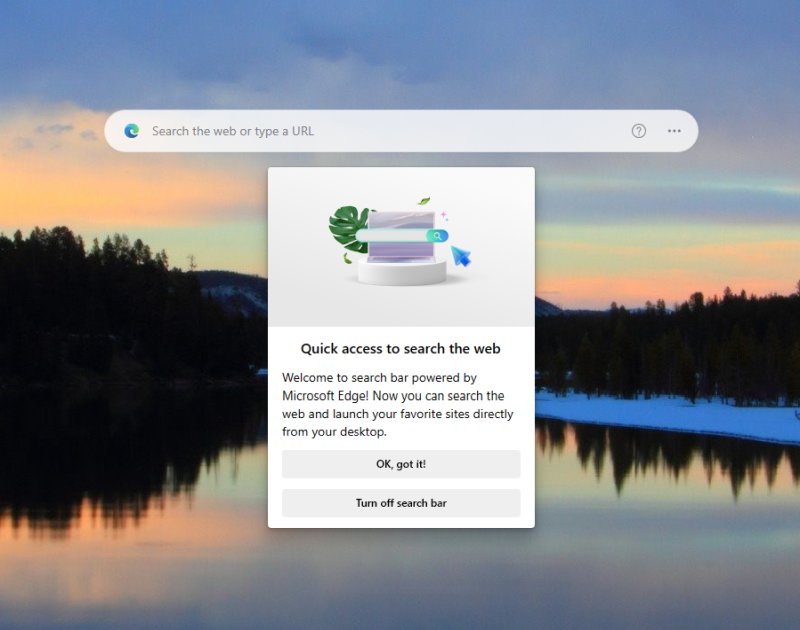
I have no idea what this thing is, except that I vomited a little seeing this. Notice the passive-aggressive language. OK, got it! does not mean YES, you corpo drones. I'm still recovering the bits and pieces of my IQ since this unwelcome encounter. Most likely triggered by some "important update" or some crap like that.
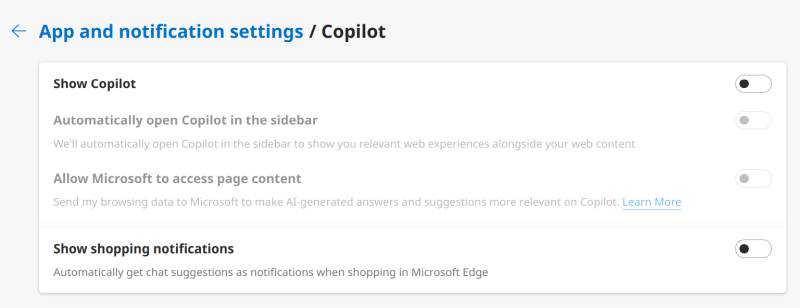
Turning a simple browsing experience into a sophisticated ad fest. This is what the long-term plan for the corporate Internet has always been. Actually, no. Even in their wildest dreams, the corpo drones could have never imagined how profitable the Web could be (because drones are not very imaginative), and how you can milk money off idiots. In retrospect, everyone will praise themselves for being a savvy entrepreneuring genius, of course. But if you happen to be using Edge (say on Linux), you still need to toggle a lot of nonsense to off.
And then, if it just so happens that millions of random people share your ideals and concerns, that actually makes for a much better case. We all perceive safety and privacy slightly differently, and yet, it seems people can broadly agree on the black & white definitions of right and wrong. As it turns out, for instance, things like car subscriptions, touch interfaces or your data seem pretty universal.
I can't - nor do I want to - tell you what to do. Instead, I'll tell you what I do. As a rule, I like to have a clear, fast way of identifying stupid things. That way, I can always be prepared. The worst thing is to be indecisive in the face of greed. That's how sales people get you to pay for that add-on or extra insurance.
- Any company that tries to sell me products as a service will never get my custom. I go out of my way to email them and tell them that. How do you tell product from service? Simple. A product is something that can and should work immutably for as long as you need it (barring damage and deterioration/wear from use). As an example from the software world, various 3D rendering programs have stopped offering perpetual licenses, and you need to pay for annual subscriptions. Absolute nonsense. Why would say a 2023 version of a program stop working in 2024 when all you do is draw lines and polygons on your own computer? The only reason is greed, of course. Another example would be imaging & restore software for your own local hard disks, believe it. Nope.
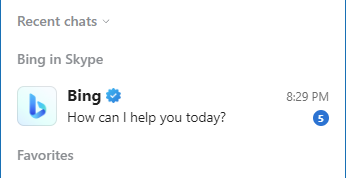
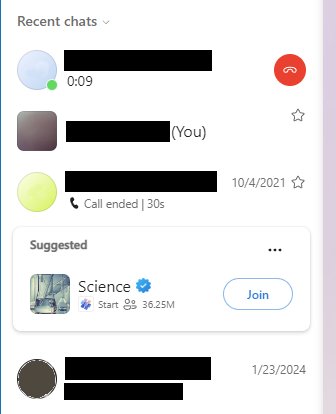
Bots, then ad channels, then AI and pointless, stupid suggestions in between your contacts in Skype. Nope.
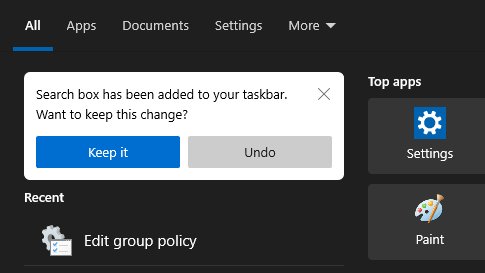
More non-consensual violation of my computer - a search box has been added. Passive voice. GTFO.
- Any company that tries to peddle a cloud-first, cloud-only, all-touch, mandatory (online) account solutions will not get my money. That's IoT in general. You can throw AI buzzwords into that lot, too. I have no desire for being a monkey or playing a monkey to someone else's tune. The money stays in the pocket.

Example: How to ruin a perfectly normal system menu with a "modern" software development approach focused around online interaction and greed. Step 1, infuse the menu with "app" like suggestions for low-IQ people. Say you have two programs installed, Skype and SketchUp, both start with SK. Begin your search by typing on the keyboard. SK returns SketchUp, but then, the menu also suggests the Snip & Sketch app, which I never used, nor have any intention of using. It does not suggest Skype (the desktop program, not the app). It suggests some documents (4) - but if you look in the right pane, under Recent, you can see at least eight SketchUp files. Makes sense? Nope.
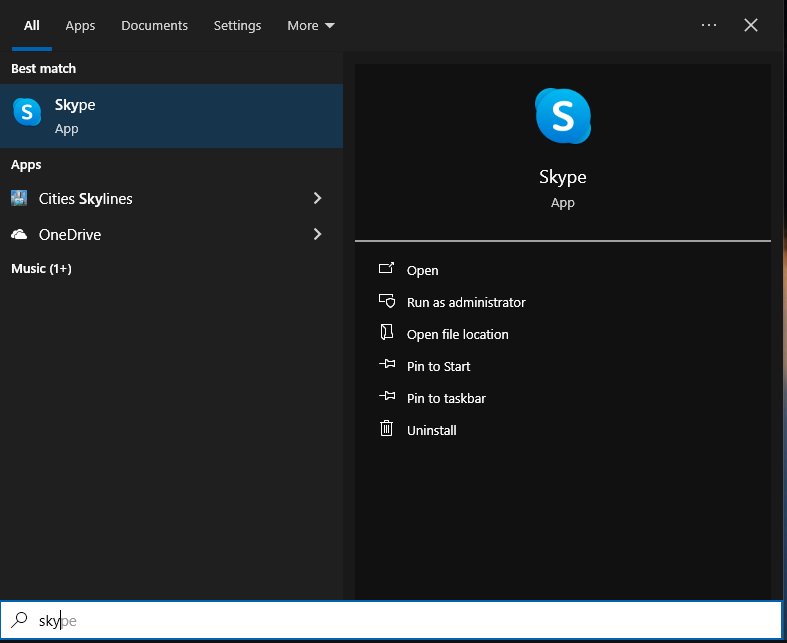
Example: How to ruin a perfectly normal system menu, continued. Now, if you type SKY, Skype will be shown. So will Cities Skylines, a game, fair, but then, boom, OneDrive. The best part is, I don't even have OneDrive installed! I removed that pointless app as one of the first configuration steps of this Windows machine years and years ago. But the cynic in me cannot not think, OneDrive, cloud, user data, hmmm, juicy profit. Stupidity and uselessness at their best.
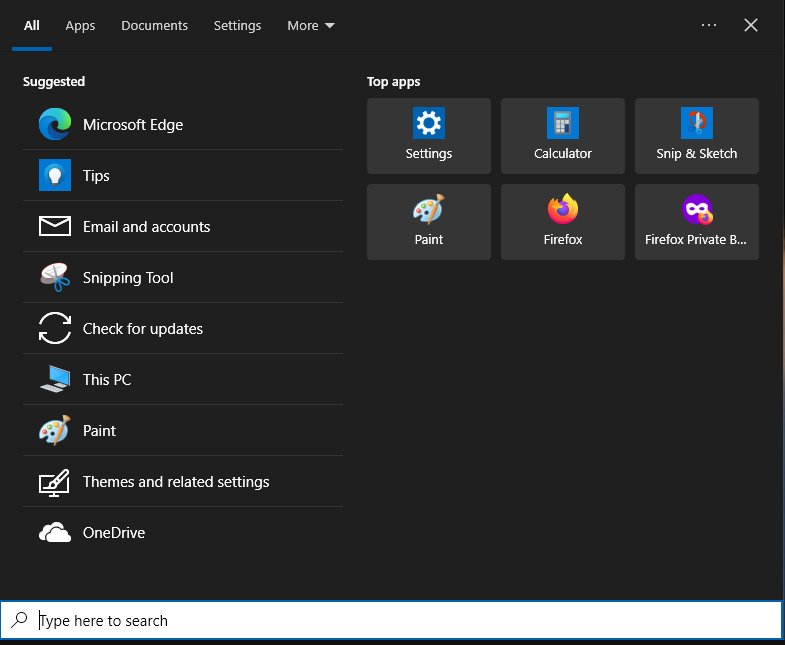
The fun continues. If you just open the menu, search for something then clear it, you will get the default view, which is Suggested content, plus "Top apps". Now, I also have no Microsoft Edge on this machine, I always remove it on Windows systems, as a principle and out of spite. Yet, it is "suggested". The same goes for OneDrive. Never used Paint, Tips, Snipping Tool, or anything alike. In the right pane, Snip & Sketch and Paint are "Top apps", despite never ever being opened, not even once. I also don't use Firefox Private Browsing. Amazing. But Windows 7 menu sucked, of course, because it was local and efficient.
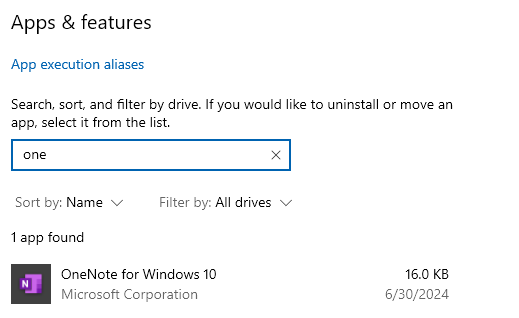
My list of apps starting with One only returns OneNote, for instance. I never asked for OneNote, nor did I ask for it to self-update - automatic updates are disabled, so whatever happened on June 30, 2024 was without my explicit approval. Of course, store apps and Windows Update are separate things.
As a le funny little aside, this is how, when I cry myself to sleep, I envision the
conversation going between a manager (can also be marketing/sales) and the scientist and engineers
expected to develop the new Windows menu:
Manager: We need to develop a new menu.
Engineer: What's wrong with the old one?
Manager: It's not new.
Engineer: All right, and what are the requirements?
Manager: When people search for something, we don't give them the actual thing they need, we
sprinkle the results for exciting online results and touch apps they can find in our store, so we can
show growth and use of our search engine and browser and and and ...
Engineer: That will annoy smart people, while idiots won't notice anyway.
Manager: You're arguing with me, I think we need to discuss a PIP.
- Any company that tries to guilt-trip me into using their stuff - good for the environment, good for this or that, etc. I want zero political and moral messages in the products and solutions I use. As it happens, this applies to a lot to electric vehicles (excuse my frequent references to vehicles, me like driving a lot). While the method of wheel spinning is not really relevant, when you think about price, range and recharging times, it gets hard selling the EV solution without a moral sub-context. Not interested. I want safety, handling, comfort, and practicality, and if comes from compressed algae, sun or electrons, it doth not matter to me.
- Still in the petrolhead space, any car manufacturer that offers touch-only essential functionality (as mentioned above) will never get my specie. A lifetime boycott is probably in order, too, but I'm willing to be a little flexible in that regard. I should have complained about electronic parking brakes sooner, alas I was too tolerant of that nonsense.
- Lastly, I abhor and detest companies that use chatbots and "AI" bots for their customer service.
With those mapped, I know what to do. The next thing is to voice my objection. Where and how it's done is entirely up to the person about to complain. As someone who does not use social media, my choices are my own website and long, detailed emails. In fact, a well-worded email can do wonders. It just might be read by an executive somewhere, who just might figure out that the potential loss in future revenues isn't necessarily worth the buzzword of the day. Technically speaking, most companies are brutally pragmatic. They don't really have any hard ideals. They want to make profit, and they will change their decisions based on what makes most money. Quite simple. You telling them you won't give them your money is a pretty solid indicator.
If I "must" interact with stupidity, like say customer-service chatbots, then I simply do not cooperate with the crap. As an example, whenever the machine says: "tell me what you need or similar", I simply either keep quiet or say "talk to an agent". I repeat this until the system gives up and transfers me to a human. I then always voice my complaint to said human. Most of the times, the conversations are recorded, and the more complaints there are about shitty solutions, the better. If I can, I also try to stop using the said services, but it's not always possible, unfortunately.
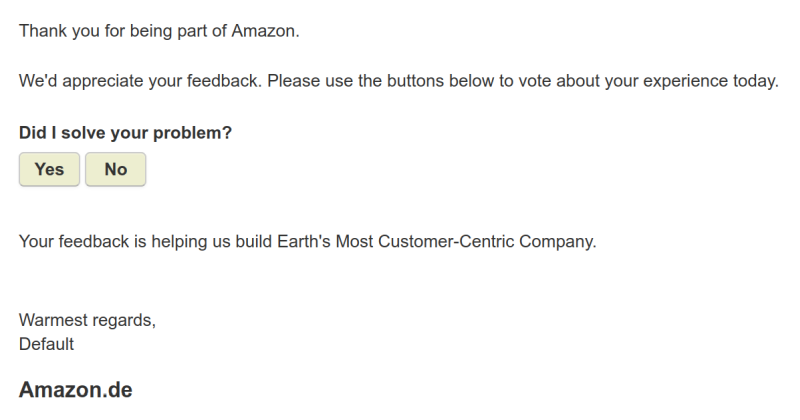
Amazon being all personal and customer-focused after sending me an open-box, second-hand router as a new device. Email correspondence with bots and clueless customer representatives shows there are a lot of people named DEFAULT in Amazon. If only changing the signature wasn't such a chore ... Great success.
Next, when I talk to real humans in real life, I spread my disdain and objection to stupidity far and wide. Being vocal and eloquent helps. For instance, when I talk to my people about cars, I always ask them what sort of AC controls their vehicle has. If they say touch, I scoff, make gagging sounds, anything to show how much I hate stupidity. It may sound odd firing off a random "I hate XYZ" in ordinary conversations, but I'm doing my best. Negativity spreads far more effectively than positivity, and with much longer lasting effects. We have the news and the social giants to thank for this important lesson in psychology and brain chemical control. Embrace the lesson.
Occasionally, I revisit an old topic. It's been twelve months since I last dwelled on a subject? Time to check if anything has changed, and if not, fire another disdain-rich email to relevant companies. I stay polite and factual. That's the best way to tell the corpo drones you won't succumb to their stupid ideas. You could say, Dedo, you just used the word stupid, that implies you're being emotional. Nope.
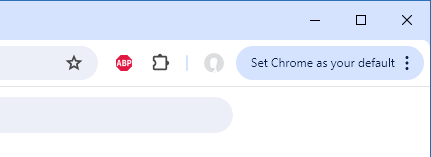
Occasionally, on Windows machines, Google Chrome will show this massive button that says "Set Chrome as your default" instead of the standard menu. The only way to dismiss this bullshit is to click on it, which will take you into Settings to coerce you, pressure you, convince you to change your defaults. Never. Firefox always. On top of that, that buttons doesn't even constitute a complete sentence, default what. Finally, Chrome does not respect the window border theming in Windows. Modern software, humanity, progress.
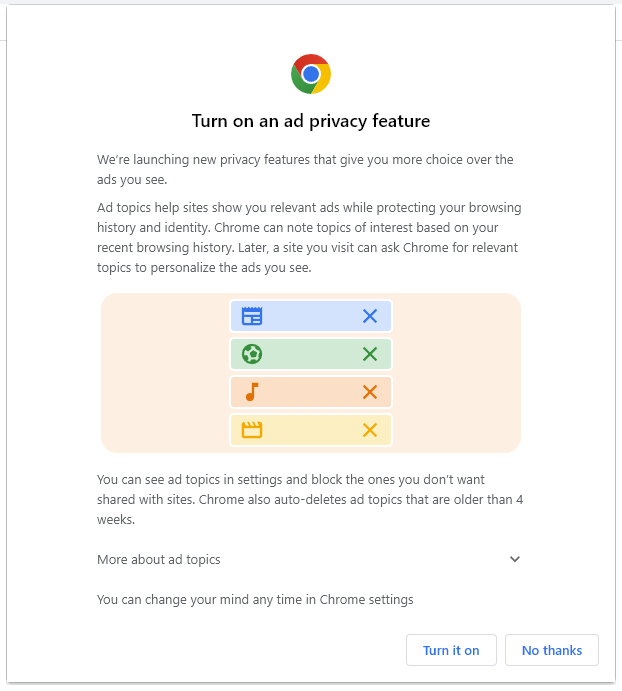
Speaking of Google, ad privacy feature - notice the phrasing: choice over the ads you see. Modern corpo speak. I don't want any ads. I don't live in 1953 California. Not interested. But hey, this is how it should be, you should see ads and be grateful for the amazing privacy choices the company gives you. Be grateful, peasant.
Stupidity is a physical, universal, cosmic quality. We just need to detect and observe the right elementary force carrier, the stupidity particle (stupidon). But even in the absence of that finding for the time being, in the same way we could do mass and gravity observations and calculations before the relevant particle discoveries, we can also talk about and measure stupidity without the particle in hand. And so, if you wonder what stupid is, it's that thing that makes your eye tick just at the very mention of it, the same way Chief Inspector Dreyfus reacts to Inspector Clouseau in The Pink Panther series, every single time. Don't fight, embrace it. Embrace it.
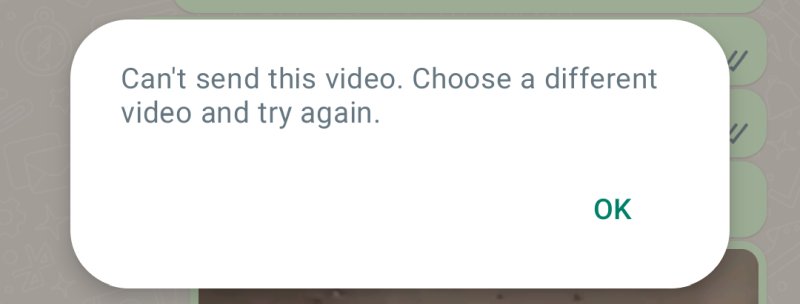
No SD video via WhatsApp for you, you lowly peasant.
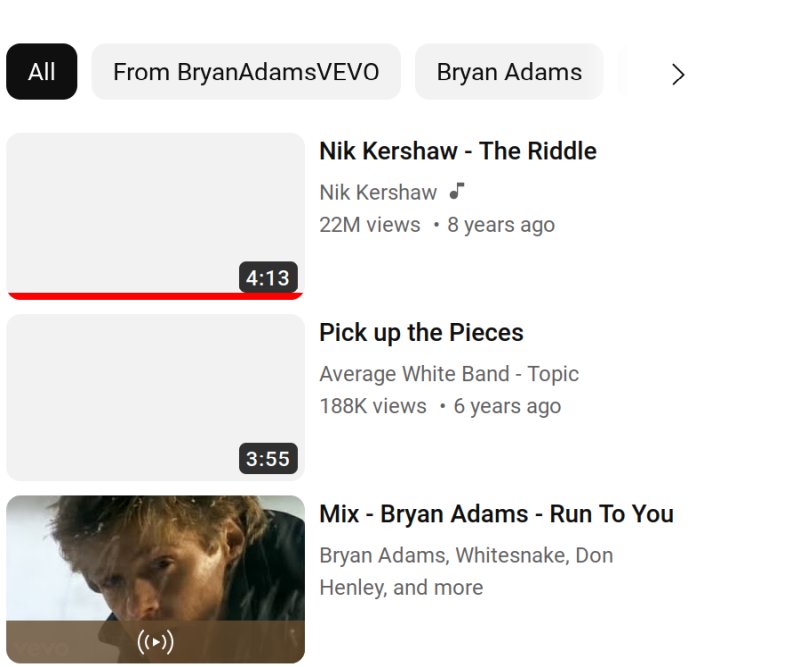
Firefox with Webp disabled, on Youtube. It would seem, if you disable Webm and Webp file formats in your browser - and let's face it, they are useless, JPEG and MP4 do everything you need as an ordinary consumer, there's no need for these "new" formats - then a bunch of sites could break, say like Youtube! The fact there's no automatic failover to alternative file formats for browsers that do not support these formats says a lot about the Youtube design, me thinks. Also, remember that big critical vulnerability in Webp that caused the entire computer space to have to urgently update, well, there's that, too. Any format can have issues, but just so it happens, there are fewer bugs of such magnitude in older, less glamorous formats. Every software has bugs, but still.
Where complaining does not work?
Now, there's one ... part of the tech world where complaints won't get you far. The open-source community, Linux (distros) in particular. With no real monetary objectives, most of the said software is developed mostly for fun by deeply nerdy people for like-minded audience. In a way, the Linux-o-sphere is more of a happyish sandbox, a playground, than any "mature" corporate entity, for the most part. And even if there are commercial aspects to some sections of the Linux ecosystem, the bulk of it rests on individual good will of its maintainers, for better or worse.
Usually, worse. If you don't like certain things, or the way certain things are being done, quite often, you will be told one of the following five things: 1) you have choice, go elsewhere, use another distro 2) the specific solution is being developed by volunteers for free in their spare time, they don't have the bandwidth to accommodate your desire 3) do it yourself, it's open source 4) you don't understand the Linux world, and/or you're a secret agent for the large corporations out there 5) file a bug, which if you do will be closed as DONTFIX or WONTFIX including a personal explanation why not (usually, it works for me, I don't see a problem, change your usage patterns), deferred until a new version is released, upon which you will be asked to refile your bug as it may no longer be relevant, or sometimes, rarely, actually solved 6) you will simply be ignored, because one of the beauties of the Internet is that you can be as passively aggressive as your soul desires.
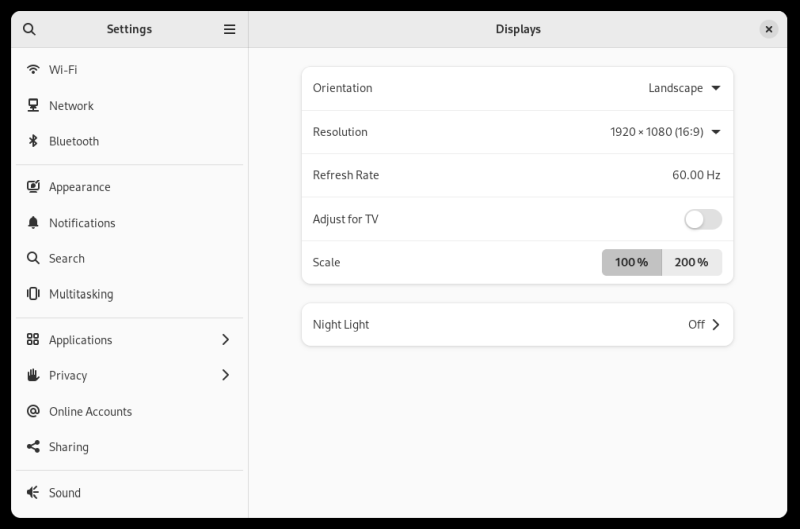
Min and Max buttons missing, no default fractional scaling, gray-on-gray-on-gray depression, meh fonts, sounds like a user interface from 1995 or something, nope, this is a modern-day Linux marvel. Screenshot from a Fedora 37 review.
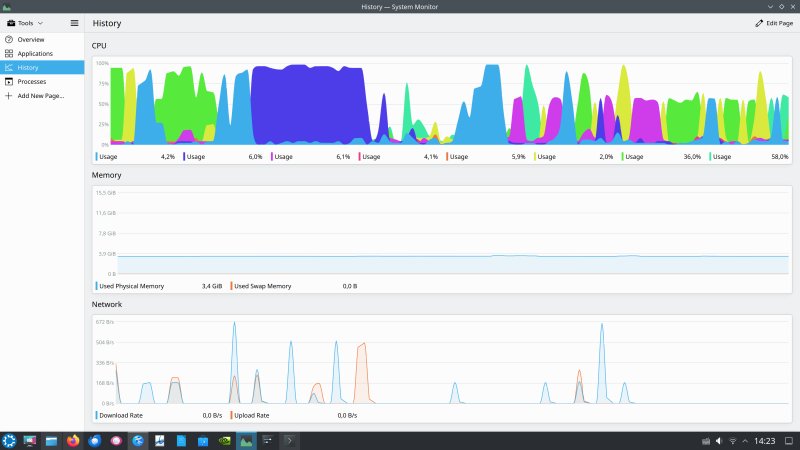
Plasma System Monitor, a "new" system monitoring program that replaces an "old" system monitoring program with one unique quality - it's inferior to the old program in every way. A typical, modern software tool, with only 85% capabilities of its predecessor, plus tons of bugs. Discussions around its use over KSysGuard went just as you can imagine (search, read, enjoy).
However, while the above observation may sound unnecessarily harsh toward open-source solution, you must also remember that the absence of corporate green also means many FOSS programs will usually be friendlier, kinder to the end user in the first place, so you won't need to worry about your kidneys being leased by the corpo borglets. But you may also not have the right product to work with, in the first place, as money does help make more professional, higher quality solutions. Not always, and to a point, with significant diminishing returns.
What the world needs is a perfect equilibrium between professionalism and moderate profit, alas, the needle usually swings either too much toward either amateurish nihilism or vampirish, zero-morality greed.
Well, there we are, me hearties.
Conclusion
The modern tech world is quite annoying. Sure, every old dinosaur has said that about any which old technology that doesn't quite align with what they learned first. But you would be mistaken if you assumed I'm one of those. Let's name a few things that are definitely better in the 2020s than they were in say the 1980s. Medical care has advanced a great deal, cars are far more reliable (except for the very last all-touch generation of smartphones on wheels), air travel is safer, the world is safer by and large, we have more efficient and faster communication. Even if we look only a decade plus back, hardware is more reliable and power-efficient, for instance. Modernity has brought tons and tons of improvement into our lives. Never forget that. But. But.
Not every change is positive, nor can be considered progress, especially in the software space. In any domain that has more or less peaked, you have pointless feature saturation that only detracts from the original idea and design. By and large, the software world plus the Internet have seen their best moment more than a decade ago. It's been a steady downhill race since, with software eclipsing everything along the way, including the hardware.
For instance, smartphones are too big, most programs keep adding new options until they need 64 GB just to run and have a critical vulnerability every second Tuesday, cloud-only software is extremely buggy and flaky and will take your soul along the way, and the service model is mostly a sad, Kafkaesque joke. Software quality is lower as there's more and more useless garbage, pointless framework abstraction, and third-party libraries reuse with no regard to security. Now with the new dot-2000-cum-2020 craze of AI nonsense (on top of touch),plus the dwindling margins (as in any saturated market segment) , the only things left for the companies that try to "innovate" are price hikes, buzzwords, and outright, shameless, medieval-corsairs-level data grab.
Ordinary people, us, the peasant scum, we don't really have much say in how the world runs. We never had. After all, since the dawn of humanity, there's always been a thin stratum of more privileged people, the elite, the noble class, call them what you will, who decided what and how, and the rest had to (mostly) follow. That's okay. That's humanity, and that's how it works.
The same is happening today, except prestige and power have a bit more ephemeral feel. You don't have much say. But luckily, you have some. The middle class has one cardinal importance - it's the big spender, the economic flywheel. If a lot of small people complain, their "resistance" effort can sum up to something big, significant enough for the mega corporations to take notice. You won't change the world, don't delude yourself, and most of the battles you fight will be in vain, but here and there, you might score a bittersweet point. And so, complain. Do your best. Resist stupidity and greed, if you can. Complaining won't make you rich, but it does feel golden when it works.
Cheers.